A Deathly Compendium of Poisonous Plants: An Interview with Author Rebecca E. Hirsch
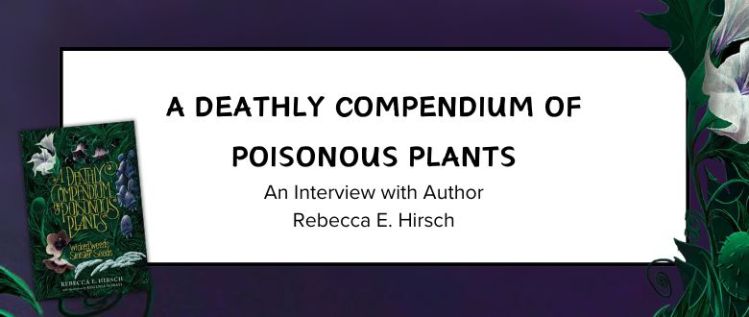
For the fans of science, history, and gothic horror, A Deathly Compendium of Poisonous Plants: Wicked Weeds and Sinister Seeds entertains and informs with profiles on nature’s deadliest plants. The gorgeously intricate illustrations by Eugenia Nobati set the tone for a wild journey into the fascinating histories of these plants as implements of medicine, warfare, and foul play.
Today scientist and author Rebecca E. Hirsch shares how she first became interested in Mother Nature’s ghoulish garden, how she chose the plants to include, and much more. Read on to find a free Common Core and Next Generation Science Standards-aligned educator guide to accompany the book!

What was your inspiration for the book?
I had previously written about creepy plants in When Plants Attack: Strange and Terrifying Plants. But there were so many fascinating plants that just didn’t fit in that book. Many were poisonous, so I focused A Deathly Compendium of Poisonous Plants on plants that are poisonous to people. I decided to delve into a range of related topics—the chemistry of these poisons, how these chemicals affect the human body, and the various ways that people have used and misused them throughout history.
Do you have any favorite moments in your research for this book?
As part of my research, I toured several gardens with poisonous plants. These included the Montreal Botanical Garden, the Mütter Museum in Philadelphia, the United States Botanical Gardens in Washington, D.C., and the Cornell Botanic Gardens in Ithaca, New York. It was thrilling to see these plants up close. Most of them look lovely and innocent. You’d never suspect how deadly they can be.
How did you decide what plants to include in the book?
There are so many poisonous plants in the world, I couldn’t possibly include them all. The plants that made the cut had an interesting history, or were connected to a notorious case of murder, or are generally nasty in how they affect people. It wasn’t enough for a plant simply to have a bad reputation. It needed to be truly terrible.
What do you hope readers will learn or discover from reading your book?
I want to pique their interest in the world of plants. I hope they will be entertained, and maybe even shocked, by these tales of the nature’s dark side. I also want them to learn to treat plants with a healthy dose of respect. I hope they learn to always be careful what they touch, and never, ever ingest an unfamiliar plant from the wild.

Have you met any poisonous plants in person?
Here in Pennsylvania where I live, snakeweed and poison ivy both grow rampant in the woods. As a child I had several bad cases of poison ivy. You never forget that terrible, maddening itch.
In my garden I grow monkshood, chili peppers, and milkweed. Ragweed also sometimes pops up as an uninvited guest. I’m terribly allergic to ragweed pollen, so I pull the plant as soon as I spot it.
On a trip to Mexico, my young daughter encountered a poisonous plant. On a tour of some Mayan ruins, she rested her hand on the trunk of a tree. Immediately she began to cry. She was too young to explain to me what was wrong. I asked our tour guide about the tree, and he just said, “Oh, don’t touch that tree.” My daughter cried for an hour, though she looked perfectly fine. After an hour, she recovered. I never did learn the name of that tree.
Praise for The Deathly Compendium of Poisonous Plants
“The striking page design evokes a strong sense of the macabre and is reminiscent of dark academia . . . An engaging, visually appealing guide for science buffs, true-crime enthusiasts, and herbalists alike.”—starred, Kirkus Reviews
“Promising “myth, mayhem, and murder,” this diabolical botanical guide delivers on all fronts . . . Deliciously macabre and almost conspiratorial in tone, Hirsch’s coverage is nicely rounded, pulling in traditional uses of many of these plants, some of which have medicinal treatments in small doses.” — Booklist
“Beautiful color photographs and drawings throughout the book make the plants easy to identify and bring their use throughout history into vivid focus. A memorable, enjoyable reference book, A Deathly Compendium of Poisonous Plants combines often gruesome historical anecdotes with edifying botany lessons.” — Foreword Reviews
“Each chapter opens with a full page, gorgeously rendered illustration of a plant in all its glory, set against a sepia-toned background that evokes a well-used, old-fashioned guidebook, and captioned photos throughout bring added appeal. While the organization makes this eminently browsable, it’s possible readers just won’t put it down.” — Bulletin of the Center for Children’s Books
Free Educator Resources
Engage young adults before and after reading with this free Common Core and Next Generation Science Standards-aligned educator guide. Download here or on the Lerner website.
Connect with the Author

Rebecca E. Hirsch is an award- winning children’s author with a PhD in plant biology. Her picture books include Plants Can’t Sit Still and Night Creatures: Animals That Swoop, Crawl, and Creep while You Sleep. She lives with her husband and three children in State College, Pennsylvania.
It’s spooky how awesome Lerner authors are! Read more interviews on the Lerner blog here.

Comments